The short version
Outside Willemstad, parking is free and there is almost always a space. Beach car parks, supermarkets, restaurants, resorts and the national parks do not charge for the car itself.
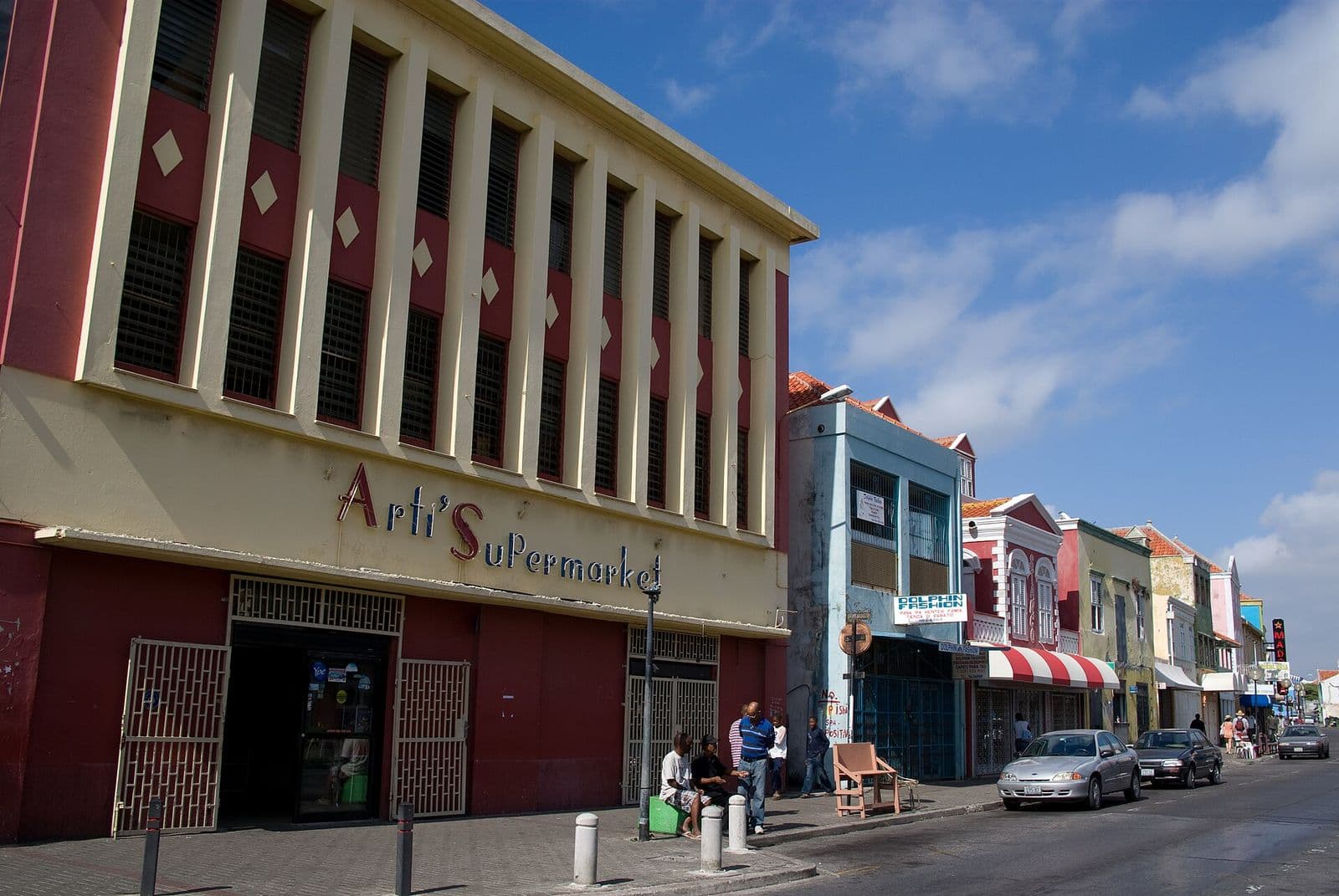
Punda and Otrobanda, the two halves of the historic center, are the exception. Both have metered on-street parking, and both fill up on cruise ship days.
The genuine difficulty in Curacao is not cost. It is that the old city streets are narrow, one-way and awkward, and that a car left at a remote beach with a bag on the seat is a target. Plan around those two things and parking is a non-issue.
Punda and Otrobanda: the paid zone
Paid on-street parking was introduced in downtown Willemstad from October 2024, run by solar-powered kiosks across both Punda and Otrobanda. As of our last check there were around 44 meters covering more than 1,200 spaces.
The rate has been about one Caribbean guilder per hour with a one-hour minimum, and around 50 cents for each additional half hour. At the 1.79 peg that is roughly 55 US cents an hour, which is cheap by any standard.
Enforcement has run Monday to Saturday between roughly 8am and 6pm, with parking free on Sundays and public holidays. Confirm the hours on the meter itself rather than relying on this, because they have changed since the scheme started.
The kiosks take contactless cards and a local Smart One card, and there is a Flowbird app wallet. Coins are not the assumption they once were, so bring a card.
Both districts are compact. Once you have parked in either half of the city you walk, and the Queen Emma pontoon bridge takes you across the water on foot. It swings open for ships, and when it does, free ferries run instead. Neither affects your car, but both affect how long the walk back takes.
Garages and free lots near the center
There are alternatives to hunting a meter. The Renaissance hotel garage in Otrobanda has offered free parking for visitors, and the large lot at the Movies in Punda has too. Both are close enough to walk into the shopping streets.
Pietermaai Parking is a dedicated garage serving Punda and the Pietermaai district, running around the clock on a postpaid basis where you pay on the way out. It is the easy answer for an evening in the restaurants.
The Rif area on the Otrobanda waterfront, around the Rif Fort and the Riffort Village complex, has its own large parking area serving the shops, restaurants and the cruise berth. It is the most convenient parking on that side of the harbor and correspondingly the first to fill.
Free on-street spaces still exist a few blocks back from the waterfront in both districts. Walking three extra minutes is usually faster than circling.
Cruise ship days
Curacao takes large ships and they berth directly at the edge of the old city. When two or three are in, the streets around Punda and the Rif area fill and stay full through the middle of the day.
The port schedule is published and worth a look before you plan a morning in town. Arriving before 10am or after 4pm makes a very noticeable difference to both parking and crowds.
The same applies at Mambo Beach and the Sea Aquarium strip, which is where a lot of ship passengers end up. On a heavy port day, take the west coast instead.
Hotels, resorts and restaurants
Resorts in Jan Thiel, Piscadera and along the coast have their own parking and it is normally free for guests. Space is rarely a problem outside the city.
Apartment stays in Pietermaai and Scharloo are the awkward ones. Older buildings there often have no dedicated space, and you are relying on the street or a nearby garage. Ask the property before you book the car, not after.
Beach clubs at Jan Thiel and Mambo run their own paid or resort-controlled lots. Day-visitor rates and validation with a purchase vary by club and change with the season.
Restaurants outside the center almost always have a lot, and it is free. Supermarkets on the ring roads have large free lots and make good meeting points.
Beaches and attractions
Most west coast bays have a free unsurfaced parking area at the top of the beach. Grote Knip has a large free lot with a viewing terrace over the water. Kleine Knip and Playa Lagun have very little space and it goes early.
The privately run beaches charge to get in rather than to park. Cas Abao has typically charged per car, around $6 on weekdays and $7 on Sundays and public holidays, covering up to four people. Porto Mari has charged per person instead, usually a few dollars. Treat both as indicative and carry small notes.
The national parks charge admission, not parking. Christoffel has been $15 for adults as of our last check, and Shete Boka charges its own fee, with the park closing admissions at 4pm.
Surfaces at beach lots are gravel, dirt or broken asphalt. Take them slowly, and check whether your rental cover applies on unpaved roads before you park somewhere that requires one.
Security and night parking
Leave nothing visible and nothing valuable, anywhere, at any time. Break-ins at remote beach and dive-entry car parks are the property crime visitors here mention most, and rental cars are easy to spot.
Move things into the boot before you arrive, not in the car park. Someone watching you load the boot has learned exactly what you did.
Prefer a lot with an attendant when there is a choice. That is part of what the entrance fee at the paid beaches buys.
At night, park under a light and inside the property where you are staying if that is an option. Willemstad's center is fine in the evening around the restaurant streets, but quiet side streets away from Pietermaai and Punda are worth avoiding.
Lock the car every time, including for a five-minute stop at a viewpoint. Drop a pin on your phone at the bigger beach lots; they look identical from the sand after three hours.
Compare rental cars from local Curacao agencies before you book.
Compare car rentals now →